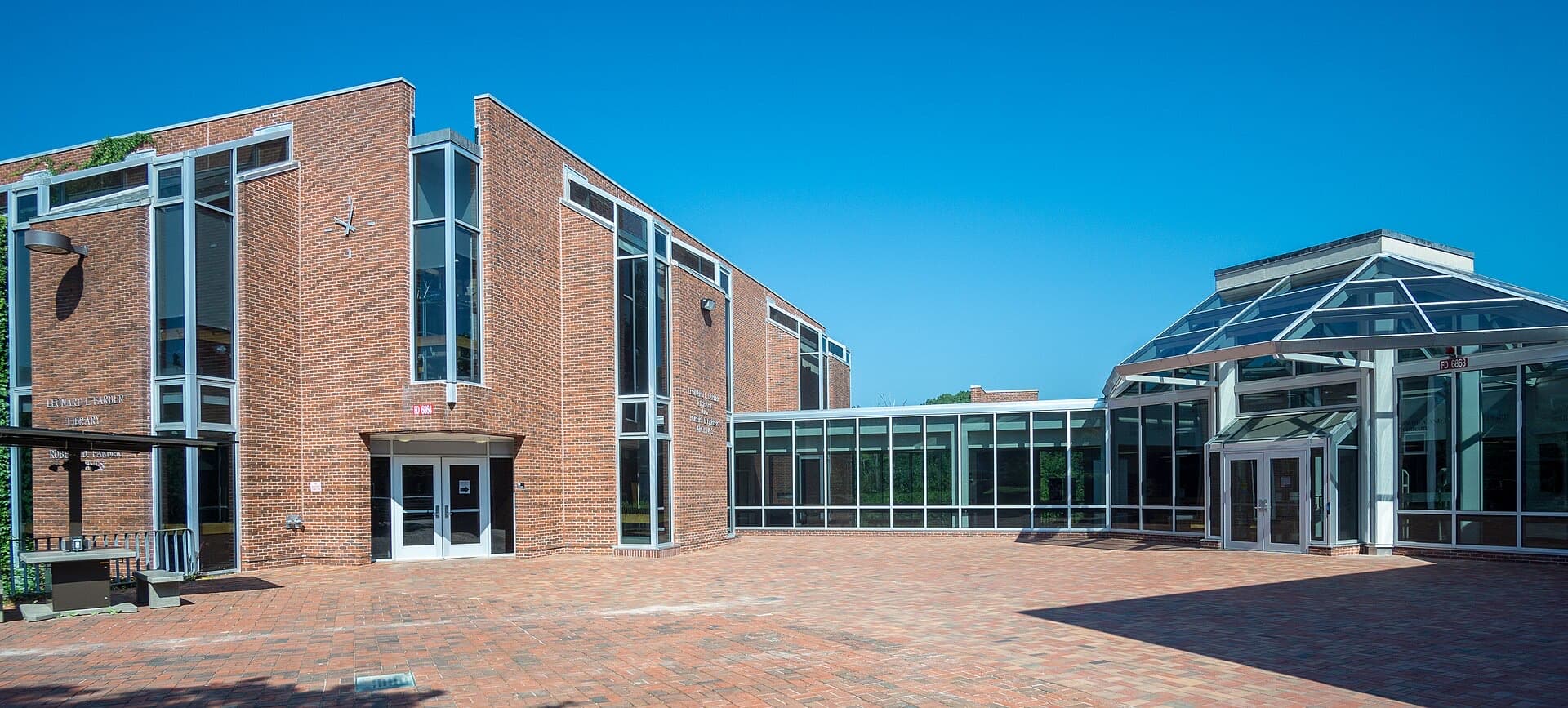

Brandeis University
Brandeis University is a private research university in Waltham, Massachusetts, just outside Boston, founded in 1948 as a nonsectarian institution under Jewish sponsorship and known for its strengths in the life sciences, the social sciences, and a strong commitment to social justice. Admission is selective: Brandeis admitted about 45% of roughly 9,800 applicants for its most recent class, and enrolled first-years posted middle-50% SAT scores of 1370–1470 and an average high school GPA near 3.84. The social sciences and the biological sciences are the two most-conferred fields, together making up more than a third of bachelor's degrees, and the student-faculty ratio is a close 8 to 1. Brandeis is test-optional and meets, on average, about 97% of demonstrated financial need for first-year students.
See how Brandeis compares
Pick up to two rivals — or search any school.
Brandeis admissions statistics
Acceptance rate
Total applicants, admitted students, and enrolled students for the most recent admission cycle.
Early decision
Brandeis offers binding Early Decision. Applying early can meaningfully change your odds — but ED commits you to enroll if admitted.
Admit rate by application plan
% admitted~0.8× higher admit rate applying early.
Standardized tests
Brandeis is currently test-optional — you may apply without submitting scores.
SAT Accepted?
ACT Accepted?
Test Optional?
SAT Scores
ACT Scores
Brandeis application deadlines — Fall 2027
Last checked August 19, 2026. If you are applying, you should verify deadlines on Brandeis’s site.
- Early DecisionNovember 2, 2026
- Early ActionNovember 2, 2026
- Early Decision IIJanuary 15, 2027
- Regular DecisionJanuary 15, 2027
Source: Brandeis’s admissions dates page · checked August 19, 2026
Brandeis supplemental essays — 2026-2027 cycle
Brandeis believes in taking your education out of the classroom and into the world. Imagine your learning extended beyond the classroom. What topic would you want to explore, and how would you pursue it? (200 words max.)
This is a program to guide you toward adjusting to the rigors and challenges of the college experience with a small cohort of peers. What strengths will you bring to the group and in what areas will you benefit from the strengths of others? (250 words max).
Writing your Brandeis application essay?
Paste your draft and get specific, line-by-line feedback on what is and isn't landing — scored against the rubrics admissions readers use.
Class rank
Where Brandeis's enrolled first-years placed in their high school graduating class.
Based on the 19% of enrolled students who reported a class rank. Brandeis does not publish an average GPA.
Admissions factors
How Brandeis weighs each part of your application.
Rigor of High School Record
Academic GPA
Standardized Test Scores
Application Essay
Recommendations
Extracurricular Activities
Character / Personal Qualities
Talent / Ability
First Generation
Level of Applicant's Interest
Class Rank
Volunteer Work
Work Experience
Geographical Residence
State Residency
Alumni Relation
Racial / Ethnic Status
Religious Affiliation
Cost of attendance
Estimated full-time annual cost from Brandeis's Common Data Set.
Private universities charge the same tuition regardless of state residency.
What families actually pay
Average net price — what was left to pay after grant aid — for students receiving federal financial aid.
Source: College Scorecard (2026)
Financial aid
Need-based aid statistics for full-time first-year students.
Frequently asked questions about Brandeis admissions
Brandeis is selective but not in the single-digit range: it admitted about 45.4% of applicants in the most recent cycle, offering admission to roughly 4,430 of about 9,800 applicants and enrolling around 744 first-years. The rigor of your high school record, class rank, and academic GPA are all weighed as very important factors, so a strong, challenging transcript matters more than any single number.
Enrolled first-year students at Brandeis report an average high school GPA of about 3.84. There is no published cutoff, but among the 19% of first-years who reported a class rank, about 39% were in the top tenth and 76.5% in the top quarter of their class — so competitive applicants are typically near the top of a rigorous course load.
Yes, Brandeis is test-optional, so you can apply without submitting scores. If your scores are strong, they can help: among enrolled first-years who submitted, the middle 50% scored 1370–1470 on the SAT and 31–34 on the ACT, with about 67% of SAT submitters scoring 1400 or above. Standardized test scores are only 'considered' in Brandeis's review, below academics and essays, so a score below that range is generally better left off.
Brandeis offers two binding Early Decision rounds (ED I and ED II) plus a non-binding Early Action plan. In the most recent reported cycle its ED rounds received 680 applications and admitted 242 — an early admit rate of roughly 36%. ED is binding, so apply early only if Brandeis is clearly your first choice; treat it as a way to signal commitment rather than a shortcut to easier odds.
Tuition and required fees run about $74,128 per year, with housing and food (about $20,260 on campus) and other expenses on top. About 52% of first-years receive need-based scholarship or grant aid, Brandeis meets roughly 97% of demonstrated need on average, and the typical need-based package for first-years is around $65,635.
Brandeis's two largest fields are the social sciences and the biological and life sciences, each accounting for roughly 18% of bachelor's degrees and together making up more than a third of all degrees conferred — a draw for pre-med and research-minded students. Business, psychology, and computer science round out the most-conferred majors, and the close 8-to-1 student-faculty ratio supports small classes.
Yes. Brandeis rates the application essay as an important factor in admissions — above standardized test scores, which are only 'considered,' and on par with recommendations and extracurriculars. Because academics carry the most weight, a specific, well-revised essay is one of the clearest ways a strong applicant can stand out from a similar academic profile.
Esslo gives free line-by-line feedback on your draft. Try it now
Popular majors
Bachelor's degrees awarded in the past year by academic major.
Student-faculty ratio
The number of students for every one faculty member, indicating the average level of access students have to instructional staff.
Student outcomes
Median yearly income of former students who received federal aid, across every major, measured four years after graduating (2017–18 and 2018–19 graduates, earnings measured 2022–2023). Debt covers federal loans of students who completed.
Source: College Scorecard (2026)
Programs
Brandeis’s most popular programs and median pay after graduation. Income data from the US Department of Education’s College Scorecard.
- Biology
74 degrees (2023-24)
~$58kmedian pay, 4 yrs after graduation~$25k median debt - Economics
72 degrees (2023-24)
~$96kmedian pay, 4 yrs after graduation~$25k median debt - Public Policy
70 degrees (2023-24)
~$76kmedian pay, 4 yrs after graduation~$25k median debt - Computer Science
51 degrees (2023-24)
~$123kmedian pay, 4 yrs after graduation~$26k median debt - Neuroscience
45 degrees (2023-24)
~$68kmedian pay, 4 yrs after graduation~$26k median debt
Show all 19 programsShow fewer
- Political Science
29 degrees (2023-24)
~$74kmedian pay, 4 yrs after graduation~$23k median debt - History
26 degrees (2023-24)
~$59kmedian pay, 4 yrs after graduation~$23k median debt - Environmental Science & Natural Resources
23 degrees (2023-24)
~$74kmedian pay, 4 yrs after graduation - Chemistry
20 degrees (2023-24)
~$47kmedian pay, 1 yr after graduation~$25k median debt - Biochemistry & Molecular Biology
19 degrees (2023-24)
~$47kmedian pay, 1 yr after graduation~$27k median debt - English
18 degrees (2023-24)
~$62kmedian pay, 4 yrs after graduation~$26k median debt - Area Studies
17 degrees (2023-24)
~$54kmedian pay, 4 yrs after graduation~$26k median debt - Fine & Studio Arts
14 degrees (2023-24)
Not publishedmedian pay after graduation - Philosophy
12 degrees (2023-24)
Not publishedmedian pay after graduation - Physics
11 degrees (2023-24)
Not publishedmedian pay after graduation - Linguistics & Language Studies
7 degrees (2023-24)
~$79kmedian pay, 4 yrs after graduation - Education
6 degrees (2023-24)
Not publishedmedian pay after graduation - Mathematics
3 degrees (2023-24)
~$86kmedian pay, 4 yrs after graduation~$27k median debt - Music
3 degrees (2023-24)
Not publishedmedian pay after graduation
Median pay data is measured from graduates who received federal student aid.
Source: College Scorecard (2026) · IPEDS (2023-24)
Campus life
On-campus housing and Greek life participation rates.
Place
How the federal government classifies the area around the campus, and what a normal year of weather looks like there.
Average temperature
Monthly high and low, °FThirty-year averages, measured at the nearest weather station rather than on campus — they describe the area, not the campus.
Source: IPEDS (HD2024) · NOAA 1991–2020 U.S. Climate Normals, NATICK, MA US station, 7.2 mi from campus
Enrollment by gender
Student diversity
Racial and ethnic breakdown of enrolled undergraduate students.
Source: Brandeis University Common Data Set 2025-2026. Figures transcribed 2026-06-08. Esslo aggregates publicly reported data and is not affiliated with Brandeis. Banner photo by Kenneth C. Zirkel, via Wikimedia Commons (CC BY-SA 4.0). Cite this page as: Esslo College Explorer, “Brandeis University admissions statistics, transcribed from the 2025-2026 Common Data Set,” https://www.esslo.org/colleges/brandeis (retrieved 2026-06-08).