.png&w=96&q=75)
California Institute of Technology
The California Institute of Technology is a small, intensely focused private research university in Pasadena, California, and one of the premier science-and-engineering institutions in the world. With fewer than 1,000 undergraduates and a 3-to-1 student-faculty ratio, Caltech is among the most selective colleges anywhere — it admitted roughly 2.6% of about 13,900 applicants. Caltech reinstated an SAT/ACT requirement starting with Fall 2026 applicants; because its most recent published class applied test-free, admitted-student score ranges aren't available yet. Computer science, engineering, and the physical sciences account for the vast majority of degrees. The figures below are drawn directly from Caltech's official Common Data Set.
See how Caltech compares
Pick up to two rivals — or search any school.
Caltech admissions statistics
Acceptance rate
Total applicants, admitted students, and enrolled students for the most recent admission cycle.
Early action
Caltech offers Restrictive (single-choice) Early Action — non-binding, but you may not apply early to other private colleges.
Standardized tests
Caltech requires the SAT or ACT, starting with Fall 2026 applicants.
SAT Accepted?
ACT Accepted?
Test Optional?
Score ranges not published yet
Caltech reinstated its SAT/ACT requirement starting with Fall 2026 applicants. Its most recent admitted class applied test-free, so published SAT and ACT score ranges aren't available yet.
Caltech application deadlines — Fall 2027
Last checked August 19, 2026. If you are applying, you should verify deadlines on Caltech’s site.
- Restrictive Early ActionNovember 1, 2026
- Regular DecisionJanuary 4, 2027
Source: Caltech’s admissions dates page · checked August 19, 2026
Caltech supplemental essays — 2026-2027 cycle
Caltech has a rigorous core curriculum and students don't declare a major until the end of their first year. However, some students arrive knowing which academic fields and areas already most excite them, or which novel fields and areas they most want to explore. If you had to choose an area of interest or two today, what would you choose?
Why did you choose your proposed area of interest? If you selected 'other', what topics are you interested in pursuing?
Collaboration: STEM as shared learning. Tell us about a time your learning in STEM was shaped by another person or group — either because you needed help, offered help, changed your thinking through collaboration, or contributed to someone else's understanding. What did that experience teach you about learning and working with others?
Process: The thought behind the outcome. Tell us about a time your approach to a STEM problem, concept, or project mattered as much as the outcome. How did you work through uncertainty or persist creatively in tackling the problem? What would you still defend about your process, regardless of the outcome?
Learning: STEM as a never-ending rabbit hole. Regardless of your STEM interest listed above, take this opportunity to nerd out and talk to us about whatever STEM rabbit hole you have found yourself falling into. Be as specific or broad as you would like.
Pursuing: STEM as sustained intellectual engagement. Tell us about a STEM question, problem, idea, or project that has held your attention over time. What drew you to it, how have you pursued it, and what do you still want to understand?
Making: STEM as creation. Tell us about something you created, tested, repaired, modeled, coded, built, or redesigned. What problem were you trying to solve and what did the process reveal to you?
Caltech students bring more than academic ability to the communities they join. What is something you would be excited to do, share, teach, make, start, or contribute as part of the Caltech community?
Writing your Caltech application essay?
Paste your draft and get specific, line-by-line feedback on what is and isn't landing — scored against the rubrics admissions readers use.
Admissions factors
How Caltech weighs each part of your application.
Rigor of High School Record
Academic GPA
Standardized Test Scores
Application Essay
Recommendations
Extracurricular Activities
Character / Personal Qualities
Talent / Ability
First Generation
Level of Applicant's Interest
Class Rank
Volunteer Work
Work Experience
Geographical Residence
State Residency
Alumni Relation
Racial / Ethnic Status
Religious Affiliation
Cost of attendance
Estimated full-time annual cost from Caltech's Common Data Set.
Private universities charge the same tuition regardless of state residency.
What families actually pay
Average net price — what was left to pay after grant aid — for students receiving federal financial aid.
Source: College Scorecard (2026)
Financial aid
Need-based aid statistics for full-time first-year students.
Frequently asked questions about Caltech admissions
Yes. Caltech admitted about 2.6% of applicants in the most recent cycle, offering admission to roughly 356 of about 13,856 applicants and enrolling around 218 first-years.
Caltech's acceptance rate is about 2.6%. In the most recent cycle it admitted roughly 356 students out of about 13,856 applicants and enrolled around 218 first-years.
Yes. Caltech reinstated a standardized testing requirement starting with Fall 2026 applicants, after several years of being test-free. Because its most recent published entering class (Fall 2024) applied without scores, Caltech has not yet released admitted-student SAT or ACT score ranges under the new policy — so there is no official middle-50% range to target yet.
Caltech does not publish an average admitted GPA in its Common Data Set, so there is no official cutoff. What it does weigh most heavily is the rigor of your high school record — listed as a very important factor — meaning the depth of your math and science coursework matters as much as the grades themselves, with academic GPA and class rank rated important.
Tuition and required fees run about $68,708 per year before housing and food. Aid is generous: Caltech meets 100% of demonstrated financial need, about 49% of students receive aid, and the average aid package is roughly $74,780 — so many families pay far less than the sticker price.
Yes — a great deal. Caltech rates the application essay, recommendations, and character/personal qualities all as very important factors, on par with the rigor of your coursework and standardized test scores. With an admit rate near 2.6%, the essays are one of the few places an academically qualified applicant can stand out from the pool.
Esslo gives free line-by-line feedback on your draft. Try it now
Caltech is a small, STEM-focused research university — fewer than 1,000 undergraduates with a 3-to-1 student-faculty ratio. Computer science is the single most popular field at about 41% of bachelor's degrees, followed by engineering (31%) and the physical sciences (14%), with math and biology rounding out a curriculum built almost entirely around science and engineering.
Caltech offers a Restrictive (single-choice) Early Action plan and does not offer binding Early Decision. Restrictive Early Action lets you apply early without committing to enroll, but it limits you from applying early to most other private colleges at the same time.
Popular majors
Bachelor's degrees awarded in the past year by academic major.
Student-faculty ratio
The number of students for every one faculty member, indicating the average level of access students have to instructional staff.
Student outcomes
Median yearly income of former students who received federal aid, across every major, measured four years after graduating (2017–18 and 2018–19 graduates, earnings measured 2022–2023). Debt covers federal loans of students who completed.
Source: College Scorecard (2026)
Programs
Caltech’s most popular programs and median pay after graduation. Income data from the US Department of Education’s College Scorecard.
- Computer Science
94 degrees (2023-24)
~$201kmedian pay, 4 yrs after graduation - Mechanical EngineeringABET accreditedMechanical Engineering is accredited by ABET, the accreditor for engineering, computing, and applied science programs.
38 degrees (2023-24)
Not publishedmedian pay after graduation - Physics
22 degrees (2023-24)
Not publishedmedian pay after graduation - Electrical EngineeringNot ABET-accredited
13 degrees (2023-24)
Not publishedmedian pay after graduation - Biomedical EngineeringNot ABET-accredited
10 degrees (2023-24)
Not publishedmedian pay after graduation
Show all 11 programsShow fewer
- Chemical EngineeringNot ABET-accredited
10 degrees (2023-24)
Not publishedmedian pay after graduation - Mathematics
8 degrees (2023-24)
Not publishedmedian pay after graduation - Chemistry
7 degrees (2023-24)
Not publishedmedian pay after graduation - Biology
6 degrees (2023-24)
Not publishedmedian pay after graduation - Neuroscience
6 degrees (2023-24)
Not publishedmedian pay after graduation - Earth & Geological Sciences
3 degrees (2023-24)
Not publishedmedian pay after graduation
Median pay data is measured from graduates who received federal student aid.
Source: College Scorecard (2026) · IPEDS (2023-24) · ABET
Campus life
On-campus housing and Greek life participation rates.
Place
How the federal government classifies the area around the campus, and what a normal year of weather looks like there.
Average temperature
Monthly high and low, °FThirty-year averages, measured at the nearest weather station rather than on campus — they describe the area, not the campus.
Source: IPEDS (HD2024) · NOAA 1991–2020 U.S. Climate Normals, PASADENA, CA US station, 1.3 mi from campus
Enrollment by gender
Student diversity
Racial and ethnic breakdown of enrolled undergraduate students.
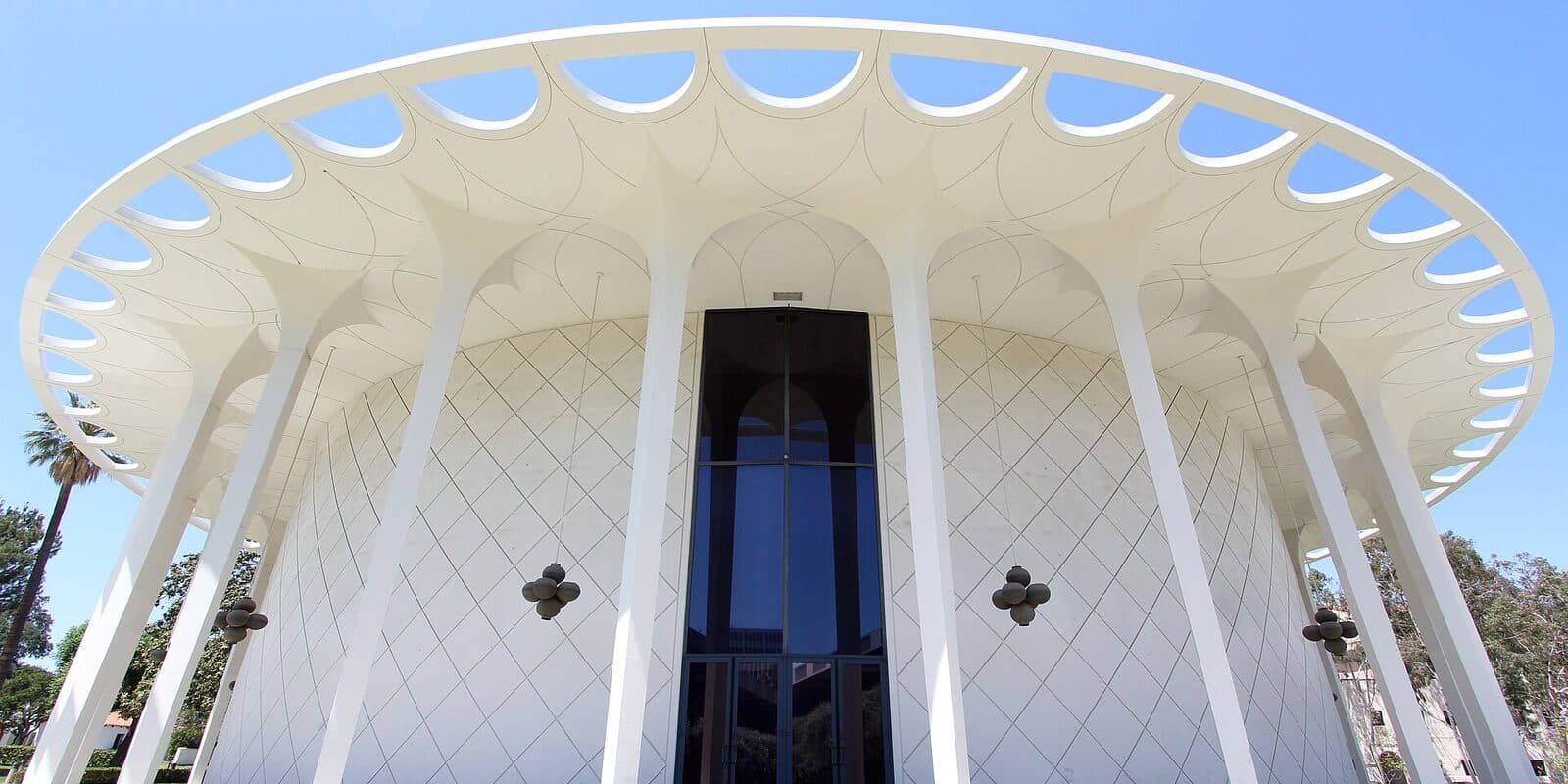
Source: California Institute of Technology Common Data Set 2024-2025. Figures transcribed 2026-06-06. Esslo aggregates publicly reported data and is not affiliated with Caltech. Banner photo by Yisong Yue, via Wikimedia Commons (CC BY-SA 2.0). Cite this page as: Esslo College Explorer, “California Institute of Technology admissions statistics, transcribed from the 2024-2025 Common Data Set,” https://www.esslo.org/colleges/caltech (retrieved 2026-06-06).