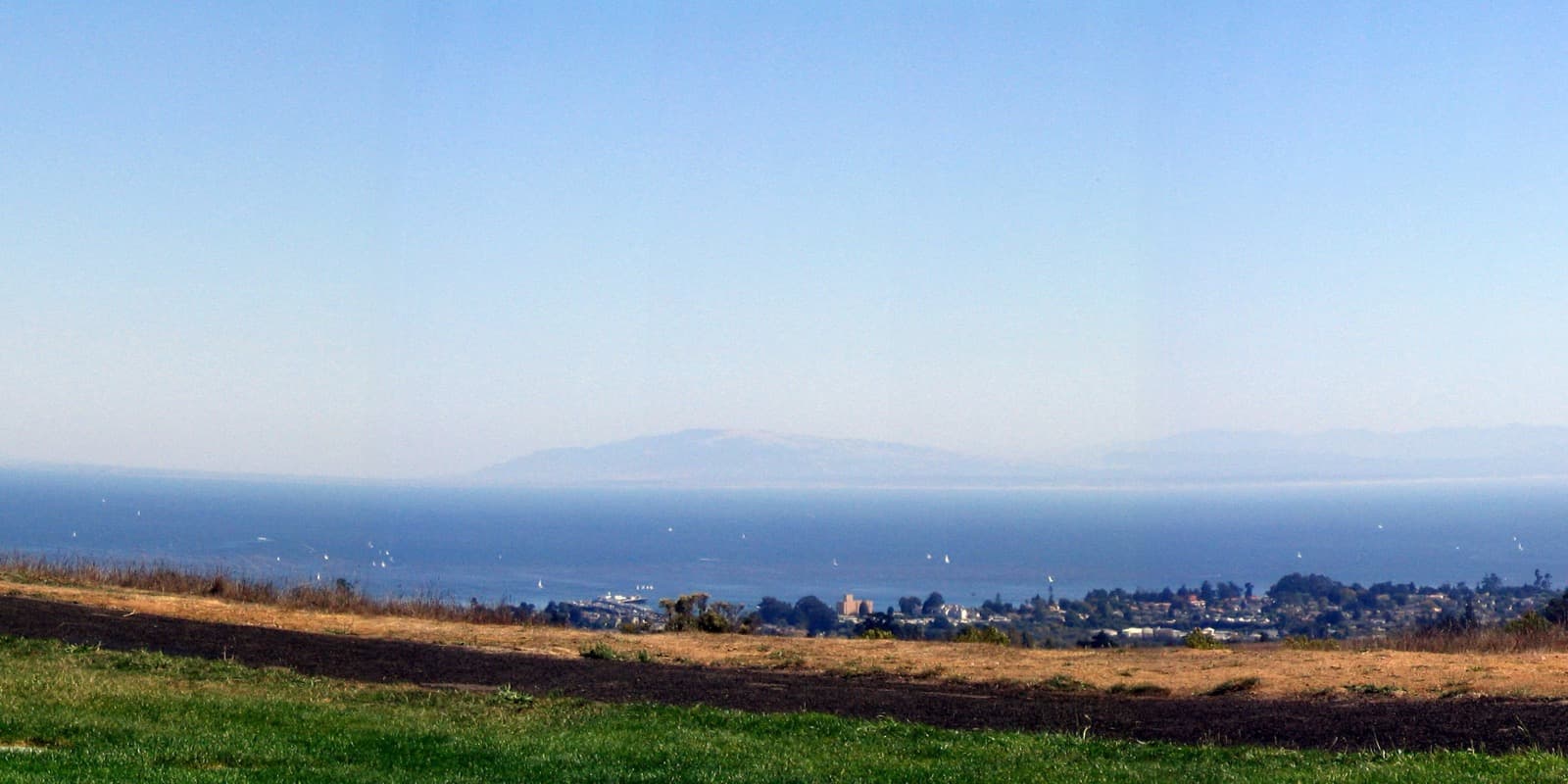

University of California, Santa Cruz
The University of California, Santa Cruz is a public research university set in a redwood forest above Monterey Bay, known for its system of small residential colleges, its strengths in marine biology, astronomy, and environmental science, and an independent streak embodied by its Banana Slug mascot. Admission is moderately selective for a UC — roughly 73% of more than 66,000 first-year applicants are admitted — and like every University of California campus, UC Santa Cruz is test-free, reviewing applications without SAT or ACT scores. Its roughly 18,000 undergraduates report an average high school GPA near 3.87, with computer and information sciences, interdisciplinary studies, and the biological sciences among the most popular fields. The figures below are drawn directly from UC Santa Cruz's official Common Data Set.
See how UC Santa Cruz compares
Pick up to two rivals — or search any school.
UC Santa Cruz admissions statistics
Acceptance rate
Overall acceptance rate, plus the in-state and out-of-state admit rates the school reports separately.
Admit rate by residency
% admittedEarly admissions
UC Santa Cruz does not offer an Early Decision or Early Action plan; all applicants apply through Regular Decision.
Standardized tests
UC Santa Cruz is test-free — SAT and ACT scores are not considered in admissions.
SAT / ACT scores are not used
UC Santa Cruz does not review SAT or ACT scores for admission, even if you submit them. Applicants are evaluated on GPA, coursework, essays, and activities instead.
UC Santa Cruz application deadlines — Fall 2027
Last checked August 19, 2026. If you are applying, you should verify deadlines on UC Santa Cruz’s site.
- Regular DecisionNovember 30, 2026
UC Application filing deadline for fall 2027
Source: UC Santa Cruz’s admissions dates page · checked August 19, 2026
Writing your UC Santa Cruz application essay?
Paste your draft and get specific, line-by-line feedback on what is and isn't landing — scored against the rubrics admissions readers use.
Admissions factors
How UC Santa Cruz weighs each part of your application.
Rigor of High School Record
Academic GPA
Standardized Test Scores
Application Essay
Recommendations
Extracurricular Activities
Character / Personal Qualities
Talent / Ability
First Generation
Level of Applicant's Interest
Class Rank
Volunteer Work
Work Experience
Geographical Residence
State Residency
Alumni Relation
Racial / Ethnic Status
Religious Affiliation
Cost of attendance
Estimated full-time annual cost from UC Santa Cruz's Common Data Set. Only tuition changes with residency.
What families actually pay
Average net price — what was left to pay after grant aid — for students receiving federal financial aid, covering in-state students only.
Source: College Scorecard (2026)
Financial aid
Need-based aid statistics for full-time first-year students.
Frequently asked questions about UC Santa Cruz admissions
Not especially — UC Santa Cruz admitted about 72.7% of applicants in the most recent cycle, making it one of the more accessible University of California campuses. It drew roughly 66,000 first-year applications, admitted around 48,000, and enrolled about 4,600 first-years. Admission is more competitive for popular majors like computer science and for out-of-state applicants.
UC Santa Cruz admitted about 72.7% of first-year applicants in the most recent cycle, from a pool of roughly 66,000 applications. Around 48,000 students were offered admission and about 4,600 enrolled, so it is among the more accessible UC campuses.
Admitted first-year students at UC Santa Cruz report an average high school GPA of about 3.87. There is no published hard cutoff, but because UC Santa Cruz is test-free, the rigor of your high school record and your academic GPA are weighed as very important — the two heaviest academic factors in the review.
No. Like every University of California campus, UC Santa Cruz is test-blind: it does not consider SAT or ACT scores in admission, even if you submit them. Standardized test scores are listed as not considered in its admissions review, so your application is evaluated entirely without them.
Counterintuitively, domestic out-of-state applicants are admitted at a higher rate than California residents. In Fall 2025, UC Santa Cruz admitted 84.0% of domestic non-residents (5,968 of 7,102) compared with 71.0% of California residents (37,344 of 52,605); international applicants were admitted at 71.9% (4,809 of 6,686). Out-of-state students are a small slice of the enrolled class — about 5% — because far fewer apply, not because they face a steeper bar.
Annual tuition and required fees are about $16,503 for California residents and $54,105 for out-of-state and international students, with on-campus food and housing adding roughly $20,900 a year (2024-2025 figures, the most recently published). About 49% of first-years receive need-based aid, with an average package near $31,542, and UC Santa Cruz meets about 86% of demonstrated need on average.
UC Santa Cruz is a public research university known for marine biology, astronomy, and environmental science, set in a redwood forest above Monterey Bay. By degrees conferred, computer and information sciences is the single most popular field at about 17% of bachelor's degrees, followed by the sciences, interdisciplinary studies, social sciences, and the arts and humanities.
Yes — UC Santa Cruz rates the application essay as a very important factor, on par with GPA and the rigor of your coursework. Because the campus is test-blind and assigns no weight to test scores, your written responses carry more relative weight than at many schools, making them one of the clearest places a strong applicant can stand out.
Esslo gives free line-by-line feedback on your draft. Try it now
Popular majors
Bachelor's degrees awarded in the past year by academic major.
Student-faculty ratio
The number of students for every one faculty member, indicating the average level of access students have to instructional staff.
Student outcomes
Median yearly income of former students who received federal aid, across every major, measured four years after graduating (2017–18 and 2018–19 graduates, earnings measured 2022–2023). Debt covers federal loans of students who completed.
Source: College Scorecard (2026)
Programs
UC Santa Cruz’s most popular programs and median pay after graduation. Income data from the US Department of Education’s College Scorecard.
- Computer Science
653 degrees (2023-24)
~$123kmedian pay, 4 yrs after graduation~$16k median debt - Psychology
448 degrees (2023-24)
~$60kmedian pay, 4 yrs after graduation~$19k median debt - Biology
217 degrees (2023-24)
~$65kmedian pay, 4 yrs after graduation~$21k median debt - Linguistics & Language Studies
170 degrees (2023-24)
~$50kmedian pay, 4 yrs after graduation~$17k median debt - Environmental Science & Natural Resources
159 degrees (2023-24)
~$55kmedian pay, 4 yrs after graduation~$18k median debt
Show all 22 programsShow fewer
- Computer EngineeringNot ABET-accredited
154 degrees (2023-24)
~$125kmedian pay, 4 yrs after graduation~$23k median debt - Economics
130 degrees (2023-24)
~$76kmedian pay, 4 yrs after graduation~$18k median debt - Fine & Studio Arts
130 degrees (2023-24)
~$40kmedian pay, 4 yrs after graduation~$20k median debt - Political Science
121 degrees (2023-24)
~$66kmedian pay, 4 yrs after graduation~$17k median debt - History
93 degrees (2023-24)
~$61kmedian pay, 4 yrs after graduation~$18k median debt - Mathematics
55 degrees (2023-24)
~$59kmedian pay, 4 yrs after graduation~$19k median debt - Earth & Geological Sciences
52 degrees (2023-24)
~$64kmedian pay, 4 yrs after graduation~$21k median debt - Electrical EngineeringABET accreditedElectrical Engineering is accredited by ABET, the accreditor for engineering, computing, and applied science programs.
49 degrees (2023-24)
~$118kmedian pay, 4 yrs after graduation~$17k median debt - Biochemistry & Molecular Biology
43 degrees (2023-24)
~$88kmedian pay, 4 yrs after graduation~$19k median debt - Philosophy
39 degrees (2023-24)
~$51kmedian pay, 4 yrs after graduation~$15k median debt - Chemistry
38 degrees (2023-24)
~$71kmedian pay, 4 yrs after graduation~$15k median debt - Physics
37 degrees (2023-24)
~$38kmedian pay, 1 yr after graduation~$16k median debt - Neuroscience
35 degrees (2023-24)
~$69kmedian pay, 4 yrs after graduation~$19k median debt - Public Health
19 degrees (2023-24)
Not publishedmedian pay after graduation - Music
10 degrees (2023-24)
Not publishedmedian pay after graduation - Biomedical EngineeringNot ABET-accredited
4 degrees (2023-24)
~$99kmedian pay, 4 yrs after graduation~$23k median debt - Area Studies
1 degrees (2023-24)
Not publishedmedian pay after graduation
Median pay data is measured from graduates who received federal student aid.
Source: College Scorecard (2026) · IPEDS (2023-24) · ABET
Campus life
On-campus housing and Greek life participation rates.
Place
How the federal government classifies the area around the campus, and what a normal year of weather looks like there.
Average temperature
Monthly high and low, °FThirty-year averages, measured at the nearest weather station rather than on campus — they describe the area, not the campus.
Source: IPEDS (HD2024) · NOAA 1991–2020 U.S. Climate Normals, SANTA CRUZ, CA US station, 3.3 mi from campus
Enrollment by gender
Student diversity
Racial and ethnic breakdown of enrolled undergraduate students.
Source: University of California, Santa Cruz Common Data Set 2025-2026. Figures transcribed 2026-06-07. In-State Tuition & Fees, Out-of-State Tuition & Fees, % of Full-Time First-Years Awarded Need-Based Grant Aid, Average Aid Package, Students With Need Who Received Aid, and Average % of Need Met, Students With Need Who Received Aid are from the 2024-2025 edition. Esslo aggregates publicly reported data and is not affiliated with UC Santa Cruz. Banner photo by Rob (popofatticus), via Wikimedia Commons (CC BY 2.0). Cite this page as: Esslo College Explorer, “University of California, Santa Cruz admissions statistics, transcribed from the 2025-2026 Common Data Set,” https://www.esslo.org/colleges/uc-santa-cruz (retrieved 2026-06-07).