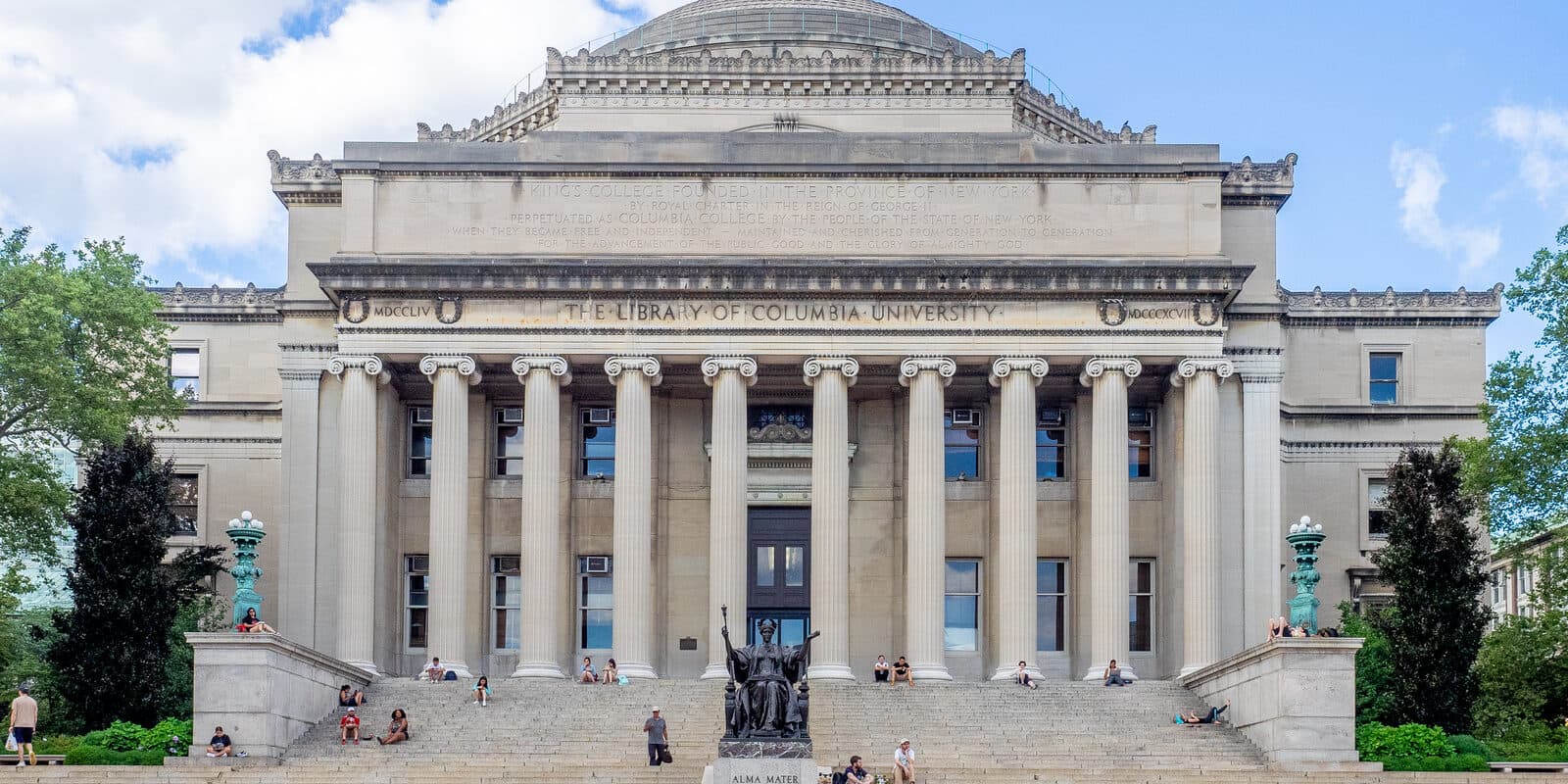
Columbia University logo

Columbia supplemental essays 2026-27

Columbia University, Fall 2027 entry, first-year applicants.

Columbia requires five short essays, in addition to the Common App personal essay. Every applicant also answers one short essay (up to 150 words), with different prompts for Columbia College and Columbia Engineering applicants. The requirements are on the Columbia-Specific Application Questions page.

Prompts72026-2027 cycle
Answers required6
Next deadlineJanuary 1, 2027Regular Decision
Columbia short essays
  1. Intellectual Development List100 words
  2. Lived Experience150 words
  3. Difference of Opinion150 words
  4. Navigating Adversity150 words
  5. Why Columbia150 words
Prompt for Columbia College applicants
  1. Areas of Study: Columbia College150 words
Prompt for Columbia Engineering applicants
  1. Areas of Study: Columbia Engineering150 words

One of the five prompts every applicant answers is new or changed since the 2025-2026 cycle.

Columbia short essays

Intellectual Development List

100 words

Columbia’s prompt

List the titles of texts, resources and outlets that have contributed to your intellectual development outside of academic courses, including but not limited to books, journals, websites, podcasts, essays, plays, presentations, videos, museums and other content that you enjoy. (100 words or fewer)

Esslo’s advice

The prompt says "outside of academic courses," so list things you chose to read, watch, listen to or visit. A work a class assigned you belongs on the list only if you followed it up on your own, such as by reading more by the same author.

The prompt names many kinds of content, but you don't need one of each. If most of what you learn from is podcasts, a list that is mostly podcasts is accurate.

Test: For each item, name one idea or question you took from it. Replace any item you can't do this for.

Lived Experience

150 words

Columbia’s prompt

Tell us about an aspect of your life so far or your lived experience that is important to you, and describe how it has shaped the way you would learn from and contribute to Columbia's multidimensional and collaborative environment. (150 words or fewer)

Esslo’s advice

The prompt has two parts: an aspect of your life that is important to you, and how it shaped the way you "would learn from and contribute to" Columbia. Name the aspect in your first sentence or two, so most of the 150 words can go to the second part.

Show the effect with something you already do, such as how you work in a group project or what you bring up in a class discussion, and then say what you would do the same way at Columbia.

Weak: Growing up in a bilingual household has made me a more open-minded person.

Example: At home I translate my grandmother's doctor visits, so in group projects I'm usually the one who restates what each person said until everyone agrees on it.

Difference of Opinion

150 words

Columbia’s prompt

At Columbia, students representing a wide range of perspectives are invited to live and learn together. In such a community, questions and debates naturally arise. Please describe a time when you did not agree with someone and discuss how you engaged with them and what you took away from the interaction. (150 words or fewer)

Esslo’s advice

The prompt asks about a time you disagreed with "someone," so choose a real person, such as a friend, a family member or a teammate, over a position you argued in a debate round.

Spend most of the essay on "how you engaged with them": what you said, what you asked and what the other person said back. A summary of both positions takes words away from that part.

What you "took away" does not have to be a change of mind. It can be something you understood about the other person's reasons, or about how you argue.

Weak: We had a heated debate, but in the end we agreed to disagree and respected each other's opinions.

Example: I asked my uncle why he thought the new bus route was a waste, and he told me it had replaced the stop he used to get to work.

Why Columbia

150 words

Columbia’s prompt

Why are you interested in attending Columbia University? We encourage you to consider the aspect(s) that you find unique and compelling about Columbia. (150 words or fewer)

Esslo’s advice

Name one or two specific parts of Columbia and, for each one, say what you have done that makes it suit you. A list of many features leaves no room to explain any of them.

You can write about parts of Columbia such as the Core Curriculum, its residential community or New York City. If you name a program, course or group, check that it exists on Columbia's own site.

Test: Replace "Columbia" with the name of another school you are applying to. If every sentence is still true, add details that apply only to Columbia.

Prompt for Columbia College applicants

One short essay (up to 150 words).

Areas of Study: Columbia College

150 words

Columbia’s prompt

What attracts you to your preferred areas of study at Columbia College? (150 words or fewer)

Esslo’s advice

The prompt says "preferred areas," so you can name more than one area of study. Columbia College's Areas of Study page includes areas of study that combine two fields, such as Economics-Philosophy, so if your interests span two fields, check whether the page lists one that combines them, and say what question connects them for you.

Start from what first drew you to the field and what you have done about it since, such as a book, a project or a course you chose. Then name the area of study from that list that you would pursue, and say what you would study in it.

Weak: I am passionate about economics and want to learn more about how the world works.

Example: After I tracked prices at our corner store for a year, I wanted to know whether a fair price is an economic question or a moral one, which is why I'd like to major in Economics-Philosophy.

Prompt for Columbia Engineering applicants

One short essay (up to 150 words).

Areas of Study: Columbia Engineering

150 words

Columbia’s prompt

What attracts you to your preferred areas of study at Columbia Engineering? (150 words or fewer)

Esslo’s advice

The prompt asks what "attracts" you to your "preferred areas" of study, so name the area of study and describe a problem in it you want to work on. A problem you have already tried to solve, in a class, a club or on your own, gives the essay something specific to describe.

Say what you built, tested or calculated, and if something didn't work the first time, what you changed. Then name the area of study from Columbia Engineering's Areas of Study page that would take that work further.

Test: Check that the essay names a specific area of study at Columbia Engineering and says how the work you described leads to it.

Columbia’s official application advice

What Columbia reads the essays for

These questions provide insight to your intellectual curiosity, habits of mind, love of learning and sense of self. They also allow the Committee on Admissions to learn more about you in your current community and why you feel Columbia's distinctive experiences in and out of the classroom would be a good fit for your undergraduate education.
the Columbia-Specific Application Questions page, updated July 28, 2026
We read your responses to our Columbia-specific application questions to gain insight into your intellectual interests and the ways your expressions of curiosity and sense of community might translate to Columbia's campus.
Columbia's Understanding the Process page
Indications of curiosity might include a desire to investigate big ideas and to examine and solve thorny problems; a questioning, unbounded spirit of inquiry and innovation; openness to cross-disciplinary scholarship, diverse perspectives and new ideas; and a willingness to interrogate personal beliefs and belief systems.
Columbia's Understanding the Process page

What this means for your essays

Columbia says the essays show your intellectual curiosity, habits of mind, love of learning and sense of self. It also says they show what you are like in your current community and why Columbia would be a good fit for you. When you read the finished set together, check that each of these appears in at least one essay.

Columbia lists a desire to investigate big ideas and a willingness to interrogate personal beliefs among its indications of curiosity. When an essay touches on something you were curious about, say what you did about it, such as the book you read next or the question you asked a teacher, instead of saying that you are curious.

Formatting the list

Your response should be a list of items separated by commas or semicolons.
the Columbia-Specific Application Questions page, updated July 28, 2026
No author names, subtitles or explanatory remarks are needed.
the Columbia-Specific Application Questions page, updated July 28, 2026

What this means for your essays

Since Columbia asks for titles without explanations, the 100 words go to titles alone, and your choice of items is the only thing the list tells Columbia about you. The same page says the items don't need numbers, a particular order or italics.

Your household, school and community

Your commitments to your household, school, and broader interests and communities can demonstrate how you might engage as a peer and participant in this rich campus life.
Columbia's Understanding the Process page
Our review process is also contextual, taking into account the multiple, intersecting ways that you have been shaped by your family circumstances; work, commute or home responsibilities; secondary school and community resources; and systemic and situational barriers and advantages.
Columbia's Understanding the Process page

What this means for your essays

Columbia names your household among the commitments it considers, and it lists work, commute and home responsibilities as part of the context its review takes into account. If caring for family or holding a job takes your time outside school, you can write about it in the Lived Experience essay, or in the Navigating Adversity essay if it was a barrier you had to work around.

Your own voice

Your application should aim to authentically convey your personality, perspectives and motivations so that we can better understand you as a person and what makes you tick, how you understand your ongoing personal development and express your sense of self.
Columbia's Understanding the Process page
Regardless of the tools and support you may have used, we expect that all submitted application materials are your own original work and reflect your authentic voice.
Columbia's First-Year Applicants page

What this means for your essays

Columbia wants to see how you understand your own development, so in the prompts that ask what you took away or how you changed, write what you think now in plain words of your own. If someone else edits a draft, check afterward that each sentence still says something you would say.

Knowledge of Columbia

Columbia students are likely to flourish when they have a willingness to step outside of their comfort zone, an appetite for communal learning and deliberate critical discourse, and a delight for the adventures that New York City provides. Thus, we look to see that you have an understanding of whether Columbia's distinctive characteristics would be fulfilling for you. Examples include knowledge of and enthusiasm for the Core Curriculum, our traditional campus in an urban setting and any other aspect(s) that you find unique and compelling about Columbia.
Columbia's Understanding the Process page

What this means for your essays

The Why Columbia prompt repeats the last words of this passage, so read the passage before you draft that essay. Columbia names the Core Curriculum and its campus in New York City as examples, and you can write about either one or about another part of Columbia, as long as you explain why it would suit you.

Choosing a school and an area of study

No. Applicants to Columbia must choose either Columbia College or Columbia Engineering.
Columbia's FAQs page
After students declare their major in their sophomore year, they will be matched with a faculty adviser within their chosen department to help them explore their intellectual interests and develop their academic schedule.
Columbia's FAQs page
Columbia College does not offer any specific preprofessional majors, such as "premed" or "prelaw."
Columbia's FAQs page

What this means for your essays

Since you apply to only one school, write about areas of study at that school.

Since students declare a major in their sophomore year, the areas of study you name in your Areas of Study essay are not a declaration of your major, and you can name more than one if you are undecided. If you are applying to Columbia College with a professional school in mind, name the areas of study you would pursue, such as Biology or History, since the College has no premed or prelaw major to name.

Areas of study at Columbia College and Columbia Engineering

Columbia College students choose from more than 80 areas of study—including a range of interdisciplinary options and joint programs, as well as hundreds of academic and research opportunities through the University's affiliated graduate schools, centers and institutes.
Columbia College's Areas of Study page, updated July 15, 2026
Columbia Engineering students develop a powerful technical foundation, drawn from 17 exciting areas of study.
the Columbia Engineering page of Columbia's admission site
In addition to in-depth exploration of engineering and applied science, Columbia Engineering students explore the humanities and social sciences with Columbia College students through intellectually challenging Core Curriculum courses and the opportunity to pursue liberal arts minors.
Columbia Engineering's Areas of Study page, updated July 31, 2026

What this means for your essays

Each school lists its areas of study on its own page, Columbia College's Areas of Study page and Columbia Engineering's Areas of Study page. Check that every area of study you name appears on your school's list, and use the name the list gives it.

If you are applying to Columbia Engineering, you can connect a liberal arts interest to the engineering area of study you name, since Engineering students take Core Curriculum courses with Columbia College students and can pursue liberal arts minors.

Research and interviews

You may upload your abstract in the Columbia-specific questions to the Common Application or in the Uploads page of the Coalition Application.
Columbia's Supplementary Materials page
If you are submitting an abstract, you will also be asked to answer a few short questions on the circumstances of your research experience, the duration of your involvement, your specific role in and contributions to the project, and contact information of your research mentor.
Columbia's Supplementary Materials page
Interviews are not a part of the application process.
Columbia's First-Year Applicants page

What this means for your essays

If you did research with a mentor, the optional abstract and its short questions already describe the project and your role in it, so your essays don't need to summarize the research. If one of your essays mentions the research, write about what the work taught you or how you worked with other people.

Since Columbia does not interview applicants, put everything you want Columbia to know in your essays instead of expecting to explain it later.

Plan your answers as one set

Since the Areas of Study prompt asks about the areas of study you would pursue, write about other parts of Columbia in your Why Columbia essay, so the two essays don't repeat each other.

The Lived Experience, Difference of Opinion and Navigating Adversity prompts can all draw on the same parts of your life, and so can your Common App personal essay. Before you draft, write one line for each of these essays saying which story it will tell, and give each story to only one essay.

Draft the list early, because the titles you choose can point to interests that your Areas of Study essay and Why Columbia essay then explain.

Columbia application deadlines — Fall 2027

Last checked August 19, 2026. Check the dates on Columbia’s site before you apply.

  • Early Decision
    November 1, 2026
  • Regular Decision
    January 1, 2027

Source: Columbia’s admissions dates page · checked August 19, 2026

How Columbia weighs essays

From Columbia’s 2025-2026 Common Data Set.

Application essayVery importantCDS C7
Applicants59,611
Admitted2,946

The Columbia University admissions profile has the rest of Columbia’s Common Data Set, including acceptance rates, test scores and how Columbia weighs each admissions factor.

Get free scores and feedback on your Columbia essays

Pick one of Columbia’s prompts and paste your draft to get scores and line-by-line feedback.

School
0 words

Frequently asked questions about Columbia supplemental essays

Columbia requires five short essays, in addition to the Common App personal essay. Every applicant also answers one short essay (up to 150 words), with different prompts for Columbia College and Columbia Engineering applicants.

The Intellectual Development List essay has a 100-word maximum. The Lived Experience, Difference of Opinion, Navigating Adversity, Why Columbia, Areas of Study: Columbia College and Areas of Study: Columbia Engineering essays have a 150-word maximum.

Columbia lists these application deadlines for Fall 2027: Early Decision, November 1, 2026 (passed); Regular Decision, January 1, 2027. Check Columbia's admissions site before you apply.

One of the five prompts every applicant answers is new or changed since the 2025-2026 cycle.

In its 2025-2026 Common Data Set, Columbia rates the application essay "very important."

Columbia accepts the Common App, the Coalition Application on Scoir and, from QuestBridge Finalists, the QuestBridge Application. On the Common App, the prompts are in Columbia's section, under its Columbia-specific questions. Coalition applicants answer them in the Columbia Supplement, which Columbia hosts and which opens once the Scoir application profile is complete.

Columbia's First-Year Applicants page says: "Regardless of the tools and support you may have used, we expect that all submitted application materials are your own original work and reflect your authentic voice." Separately, if you apply through the Common App, its fraud policy lists this as fraud: "Submitting plagiarized essays or other written or oral material, or intentionally misrepresenting as one's own original work: (1) another person's thoughts, language, ideas, expressions, or experiences or (2) the substantive content or output of an artificial intelligence platform, technology, or algorithm."

Prompts: read from the Common App on August 19, 2026. Columbia’s requirements and advice: the Columbia-Specific Application Questions page; Columbia's Understanding the Process page; Columbia's First-Year Applicants page; Columbia's FAQs page; Columbia College's Areas of Study page; the Columbia Engineering page of Columbia's admission site; Columbia Engineering's Areas of Study page; Columbia's Supplementary Materials page, all checked November 19, 2026. Deadlines: Columbia’s admissions dates page, checked August 19, 2026. Essay rating and applicant counts: Columbia University Common Data Set 2025-2026. AI policy: Common App fraud policy, checked August 19, 2026. Esslo is not affiliated with Columbia.